Hydrocarbon
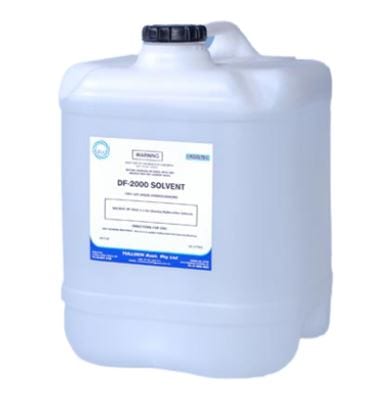
Image of DF2000 (Isopar) Synthetically manufactured high purity isoparaffinic solvent used in modern hydrocarbon machines
Below is a good description of Hydrocarbon solvents taken from https://www.industrykitchens.com.au/Blog/what-are-the-chemicals-used-in-dry-cleaning/?srsltid=AfmBOoo5DkikaXIPwKFKMKbNbnfQ3dcQz6j4q9I9F3vPnz28YTot9FTb
Hydrocarbons - A Traditional Choice for Dry Cleaning
What are the chemicals used in dry cleaning, you ask? Long before the arrival of more complex chemicals, hydrocarbon solvents were widely used in dry cleaning operations. This class of chemical compounds is a traditional choice, mainly because they are less aggressive and hence cause minimal damage to delicate clothing pieces.The term 'hydrocarbon' might sound like something straight out of your high school chemistry textbook but don't worry; it's not as complicated as you think. In simple terms, these solvents contain only carbon and hydrogen atoms. Their use dates back centuries when people discovered that they could clean clothes without making them wet.One characteristic feature of hydrocarbons, particularly those used in dry cleaning services, is their higher flashpoint compared to other solvents such as perchloroethylene (perc). This means hydrocarbons catch fire at higher temperatures which reduces risk during the cleaning process.
Detailed Examination: Hydrocarbon Solvent Features
You can observe that every dissolvent has its own particular advantages and disadvantages contingent upon how it collaborates with various materials. So what makes hydrocarbons tick? Let's delve deeper into some key features:
-
Gentleness: Compared to perc or glycol ethers, for instance, hydrocarbons tend to be gentler on fabrics due to their milder
nature.
-
Cleaning Cycle Time: One interesting fact about this traditional solvent is that it requires a longer cycle time than
others. (Don’t mistake this slower pace for inefficiency though.)
-
Risk Reduction: As mentioned earlier, the relatively high flashpoint significantly reduces the risk of fires during dry
cleaning operations.
However, hydrocarbon solvents are not without their drawbacks - they may be less effective in removing certain stains and can leave an oily residue on fabrics. For instance, these solvents are not as effective in removing certain stains and can sometimes leave an oily residue on fabrics. But hey, no solvent is perfect.
Hydrocarbon Solvents (DF-2000, ExxonMobil EcoSolv):
- Usage: Good for more delicate fabrics (e.g., silk, acetate, rayon) and garments with sensitive dyes.
- Advantages: Less aggressive than PERC, gentler on fabrics, and less toxic.
- Drawbacks: Not as effective on heavy, oily stains compared to PERC. Slower drying times.
Solvent Cost
- Average cost: $13.95 per gallon (based on a 55‑gallon drum)
Solvent Mileage
- 1,500–1,800 lbs per gallon — Standard Class IIIA machine
- 4,000+ lbs per gallon — K Series Class IIIA machine
Actual mileage depends on equipment condition, wash times, additive use, and maintenance.
Waste Disposal Requirements
All process waste must be managed in compliance with:
- Federal regulations
- State regulations
- Local authority requirements
Important:
🚫 Do NOT dispose of solvent or waste in sewers.
✔ Waste must be collected and removed by an appropriate licensed waste hauler.
Industry Usage
- 10,000+ machines in operation
- Used across 8,000+ drycleaning plants in the United States
Key Considerations / Legitimate Issues
While not considered major issues, operators must address the following when using High Flash Hydrocarbon Solvents:
Fire Codes
NFPA 32 and IFC standards for Class IIIA plants have relaxed in recent years due to improved Class IIA machine safety features.
Permitting Requirements
- Local Fire Marshal (Authority Having Jurisdiction) must review and approve facility design/operation.
- This applies to all drycleaning plants, regardless of solvent.
Air Emission Permits
May be required depending on state or local environmental regulations.
Safe Handling Practices
Operators must follow safe handling procedures specific to the solvent—standard practice for all chemicals.
Common Misconceptions
Misconception: “Hydrocarbon solvents do not clean effectively.”
This belief is typically linked to:
- Inadequate wash times
- Little or no use of additives (detergent)
Fact:
All drycleaning solvents — including water — require:
- 18–20 minutes wash time
- Proper detergent/additive use
When operated correctly, High Flash Hydrocarbon Solvents deliver cleaning performance equal to or better than other solvents.
Improved Performance With Heat
Using heated hydrocarbon solvent (up to 110°F / 43°C) has demonstrated stronger cleaning results.
Top Three Benefits
- Cost‑effective operation
- Virtually odorless cleaning results
- Straightforward transition and simple ongoing operation