Garment Alert - Important of solvent levels in a drycleaning machine
Below is some technical advice provided by Howard Duffy, Technical Officer, on the importance of correct solvent levels within a drycleaning machine.
For further information there is also a very informative Technical Operating Information bulletin on the DLI website under Member Only resources.
To access this DLI bulletin logon to www.dlionline.org and go to the Members Only Section and search for Adequate Solvent Levels in the Drycleaning Machine.
Importance of correct solvent levels in the dry-cleaning machine
The DIA has received two enquiries in recent times about the colour of garments after dry cleaning.
There are two consequences of too little solvent in your dry-cleaning machine as drycleaning machines have pumps designed to always operate full of liquid:
- Cavitation
- Redeposition
Cavitation
Low levels of solvent will result in a reduction of solvent flow which can cause the pump to cavitate.
Some describe cavitation as the creation and collapse of air bubbles in the solvent so there is rapid succession and released energy of the of the implosion of the gaseous cavities.
The results pf this process will lead to physical damage to the pump requiring downtime and additional repairs and maintenance.
There may be other factors contributing of your pump cavitating. It may be a simple blocked button trap filter or pre pump filter or a partial blockage in a pump line.
Just as importantly low solvent flow into the cage and so through the garments in the machine can cause damage to the garments.
A flow rate of approx. 5 litres per pound of cleaning per minute is a recommended rate and desirable.
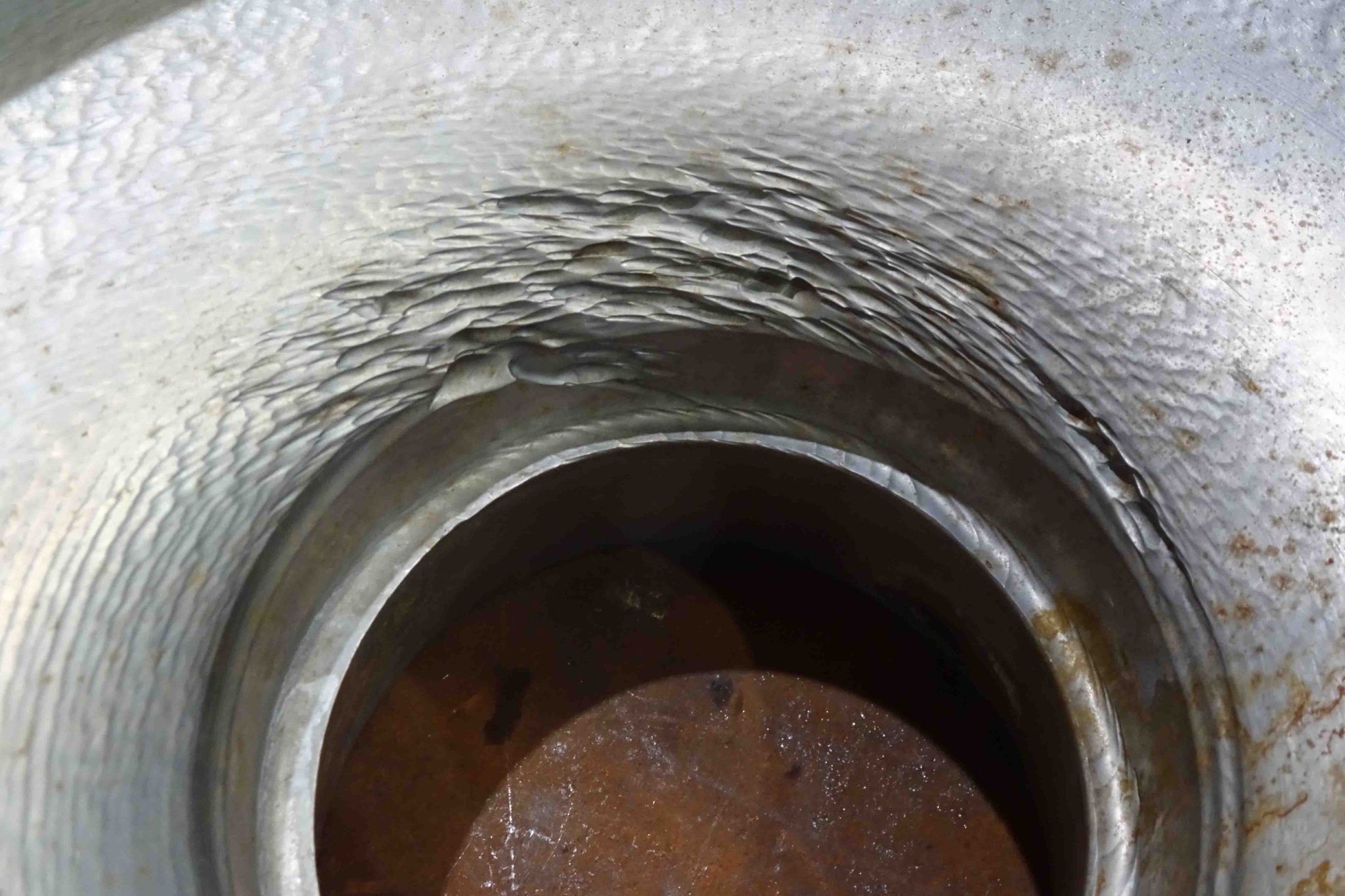
Erosion and pitting on a pump from cavitation
Redeposition
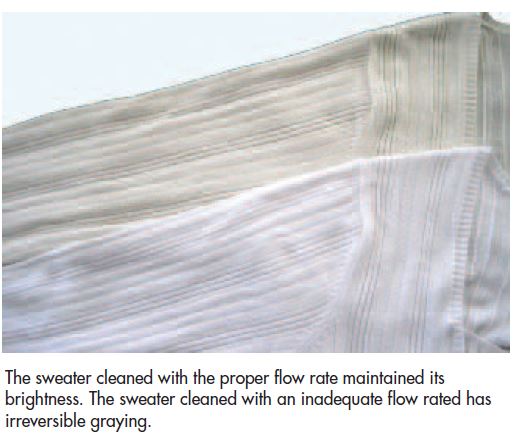
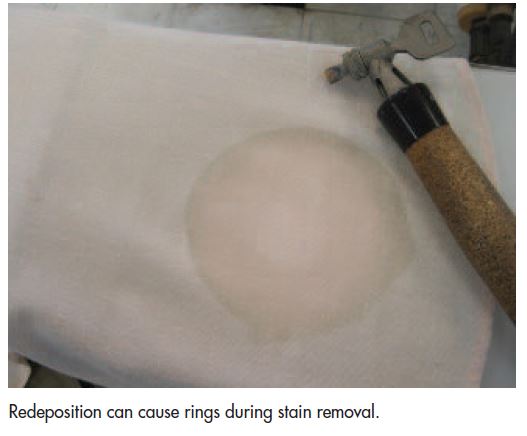
Low flow can result in finely dispersed insoluble soil which has been released from the garments by the soap and mechanical action being redeposited on the garments causing loss of whiteness, greying and redeposition,
Redeposition in some cases can be permanent, no amount of recleaning will remove it. In some cases, removal on the spotting board is
possible. One way of checking is to place the garment on the board and drop a little pure solvent on the garment if a ring appears as
the solvents spreads outwards it is more likely to be redeposition.